2026-11-03
Bitfinex Lending Bot: A Practical Guide to Getting Started
Set up a Bitfinex lending bot with clear funding rules, API checks, risk controls, and dashboard reviews. Understand APR variability before you commit.
Lendfinex Research
Crypto Trading Analyst
To set up a Bitfinex lending bot, define your funding rules, verify the required account permissions, connect your account through the documented process, and begin with a limited allocation. With Lendfinex, focus on Bitfinex margin funding execution, strategy selection, and dashboard analytics while treating APR as variable rather than promised income.
Why a Bitfinex lending bot matters
Margin funding requires repeated decisions about rates, duration, available balances, and when to place or replace offers. A bot can apply predefined rules consistently, but its usefulness depends on those rules and the conditions in which they operate. It cannot create borrower demand or remove exchange exposure.
For traders, the practical objective is to manage eligible capital without constantly supervising individual offers. Before starting, distinguish money available for lending from funds needed for trading, withdrawals, or short-notice commitments. A higher displayed rate is not necessarily a better result if capital remains unfilled or becomes unavailable when you need it.
Step 1: Define your allocation and liquidity requirements
Start with the amount you can leave allocated under the funding terms you accept. Your allocation should reflect your liquidity needs and tolerance for exchange, asset, and operational risk. Treat this as a funding mandate, separate from your trading strategy.
For example, suppose you hold 10,000 units of an eligible funding asset but expect to need 4,000 for trading. Setting the bot’s working allocation below the remaining 6,000 leaves a buffer for unexpected requirements. These figures illustrate allocation logic; they do not establish an appropriate balance for every account.
Write down the constraints before connecting anything. This makes later decisions easier when market rates move and the temptation to change settings increases.
- Working allocation: The maximum balance you intend to make available for lending.
- Liquidity reserve: Funds excluded from lending because you may need immediate access.
- Duration tolerance: The funding terms compatible with your planned use of capital.
- Review triggers: Conditions that require intervention, such as unexpected idle balances or connection errors.
Step 2: Verify account readiness and connection permissions
Review Lendfinex’s Bitfinex lending setup process before creating credentials or transferring funds. Confirm the current requirements for your Bitfinex account, supported funding assets, balance location, and account eligibility. Product interfaces and exchange requirements can change, so follow the current documented sequence.
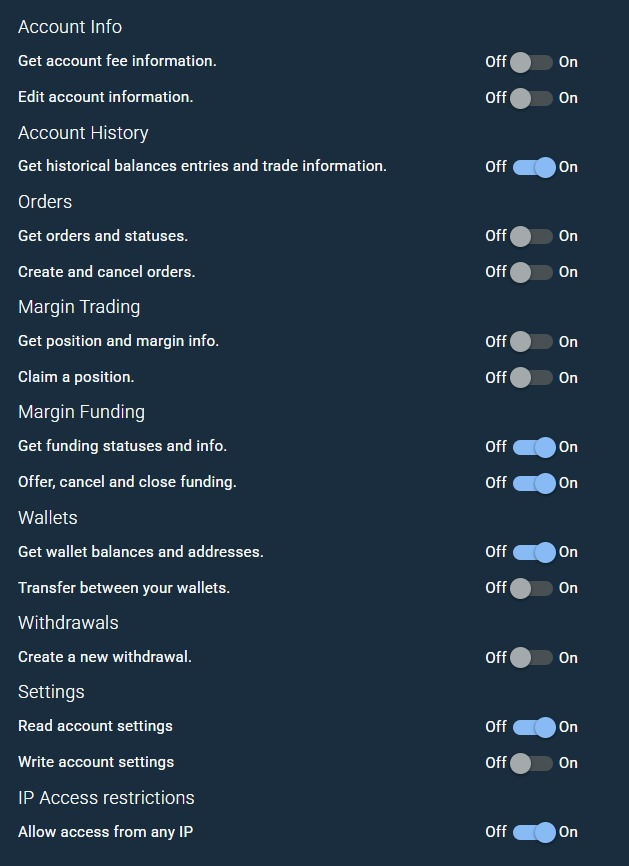
If the connection uses API credentials, grant only the permissions explicitly required for funding operations. Verify whether withdrawal access can remain disabled, and avoid granting unrelated trading permissions unless the documentation establishes a necessary reason. Store credentials securely and never share secret values through ordinary support messages.
Confirm how to revoke access before enabling the connection. You should understand the difference between disconnecting a service, stopping new offers, and changing existing funding commitments. Revoking credentials may stop future instructions without releasing capital already committed under exchange terms.
Step 3: Select a strategy that matches your constraints
Review the Lendfinex lending strategy information with your allocation mandate beside you. Evaluate how the available strategy handles offer placement, rate selection, duration, and idle balances. Choose based on execution behavior you understand rather than a strategy name or an attractive rate snapshot.
Passive29D is a relevant strategy context to investigate, but its name alone does not establish its complete operating rules. Verify its current duration logic, pricing behavior, renewal approach, and available controls. Do not assume every loan lasts exactly 29 days or that a particular return follows from the label.
Consider a practical trade-off: a stricter minimum rate may leave more capital waiting, while accepting lower rates may increase deployment at a lower return per funded unit. Neither setting is universally preferable. The appropriate choice depends on your liquidity requirements and your willingness to wait for acceptable borrowing demand.
Step 4: Configure execution rules and risk controls
Translate your mandate into the settings actually available in Lendfinex. Verify which controls are supported before relying on them, including allocation limits, rate parameters, duration choices, and pause behavior. If a control is unavailable, decide whether a manual review process adequately addresses the gap.
Check how the service handles offer replacement and connection interruptions. A disconnected dashboard does not necessarily mean exchange-side offers have disappeared, and a running service does not prove that every instruction succeeded. Understand which account state is authoritative when the interface and exchange records disagree.
Keep your initial configuration simple enough to explain in plain English. For instance: “Use only my designated funding balance, apply the selected strategy’s documented rules, and stop increasing exposure when my allocation limit is reached.” If your intended behavior cannot be expressed clearly, resolve the ambiguity before starting.
Step 5: Start small and verify the full funding cycle
Begin with a limited allocation that lets you observe execution without committing your entire intended balance. A successful connection is only the first checkpoint. You also need to verify that offers, fills, balances, and reporting behave consistently with your settings.
- Confirm the starting state: Record available funds, existing offers, and any active funding before enabling the bot.
- Inspect initial offers: Check the asset, amount, rate convention, and duration against the selected rules.
- Distinguish offered from funded: An open offer is not an active loan and should not be counted as earned yield.
- Reconcile account records: Compare the dashboard with Bitfinex’s funding and balance records.
- Observe subsequent handling: Verify what happens when offers remain unfilled or funds become available again.
If you find a mismatch, pause additional allocation where possible and investigate the relevant records. Preserve timestamps and error messages, but remove credentials from anything shared with support. Increase the allocation only after you understand the observed behavior.
Step 6: Monitor realized results and maintain the setup
Use Lendfinex dashboard analytics to review deployment and earnings alongside your original funding mandate. Verify which metrics the dashboard provides and how each is calculated. An offered rate, a rate attached to active funding, and a return calculated across your entire allocated balance describe different things.
Idle capital matters. If only part of your allocation is funded, applying that loan’s annualized rate to the full balance overstates the result. Likewise, distinguish gross funding income from net results after applicable exchange charges and service costs, using the current fee schedules rather than assumptions.
Review after operational changes as well as market changes. Updated credentials, altered permissions, strategy adjustments, and balance transfers can all affect execution. For Hong Kong users managing a global market online, choose review times you can maintain consistently and record the timezone used in your notes.
Expert tips for interpreting APR and avoiding configuration drift
Always identify the rate convention before comparing figures. A daily funding rate and an annualized percentage are not interchangeable, and annualization does not guarantee that the same rate remains available throughout the year. Confirm whether any displayed calculation assumes reinvestment.
Separate income in the funding asset from changes in that asset’s value against your reporting currency. A positive lending result does not guarantee a positive portfolio result. Lending an asset also retains its underlying risks alongside exchange custody and account-access exposure.
Change one material parameter at a time and record the reason. Adjusting allocation, rate thresholds, and duration together makes it difficult to understand what caused a change in deployment or earnings. Assess the trade-off using comparable periods while recognizing that borrowing demand may differ.
Finally, distinguish stopping the bot from exiting funding. Before you need liquidity, verify the current treatment of open offers, active commitments, and returned balances. Planning an exit around documented funding terms is more reliable than assuming a pause button makes all capital immediately withdrawable.
Start with a clear mandate and a measured allocation
Before signing up at lendfinex.com, review Lendfinex pricing and plan details against your intended allocation and operating needs. Verify current charges and whether a free trial is available, including its conditions, before committing.
For setup questions, use the Lendfinex FAQ and contact guidance to find the currently listed contact route and check whether WhatsApp support is offered. Describe your funding objective and the rule you need clarified; keep API secrets out of the conversation.
Frequently asked questions
Does a Bitfinex lending bot guarantee a particular APR?
No. Funding rates, borrower demand, deployment levels, and idle periods affect results. A bot applies execution rules, but it cannot ensure fills or preserve a temporary market rate. Evaluate realized income across the relevant balance and period, then account for applicable costs.
What should I verify before choosing Passive29D?
Verify its current documented rate-selection rules, duration behavior, renewal process, and available risk controls. Match those details to your liquidity requirements. The strategy name does not establish a guaranteed holding period, return, or ability to exit an active funding commitment early.
Can I withdraw my funds immediately after stopping the bot?
Do not assume so. Stopping new instructions, cancelling open offers, and receiving funds back from active commitments are separate events. Check the service’s pause behavior and Bitfinex’s current funding terms, then confirm the available balance before planning a withdrawal.
How often should I review my lending setup?
Review closely during initial setup and after material changes, then use a schedule consistent with your exposure and liquidity needs. Investigate connection failures, unexpected balances, and unexplained differences in records promptly. Regular review should confirm that execution still follows your mandate, rather than encourage constant reactions to short-term rate movements.